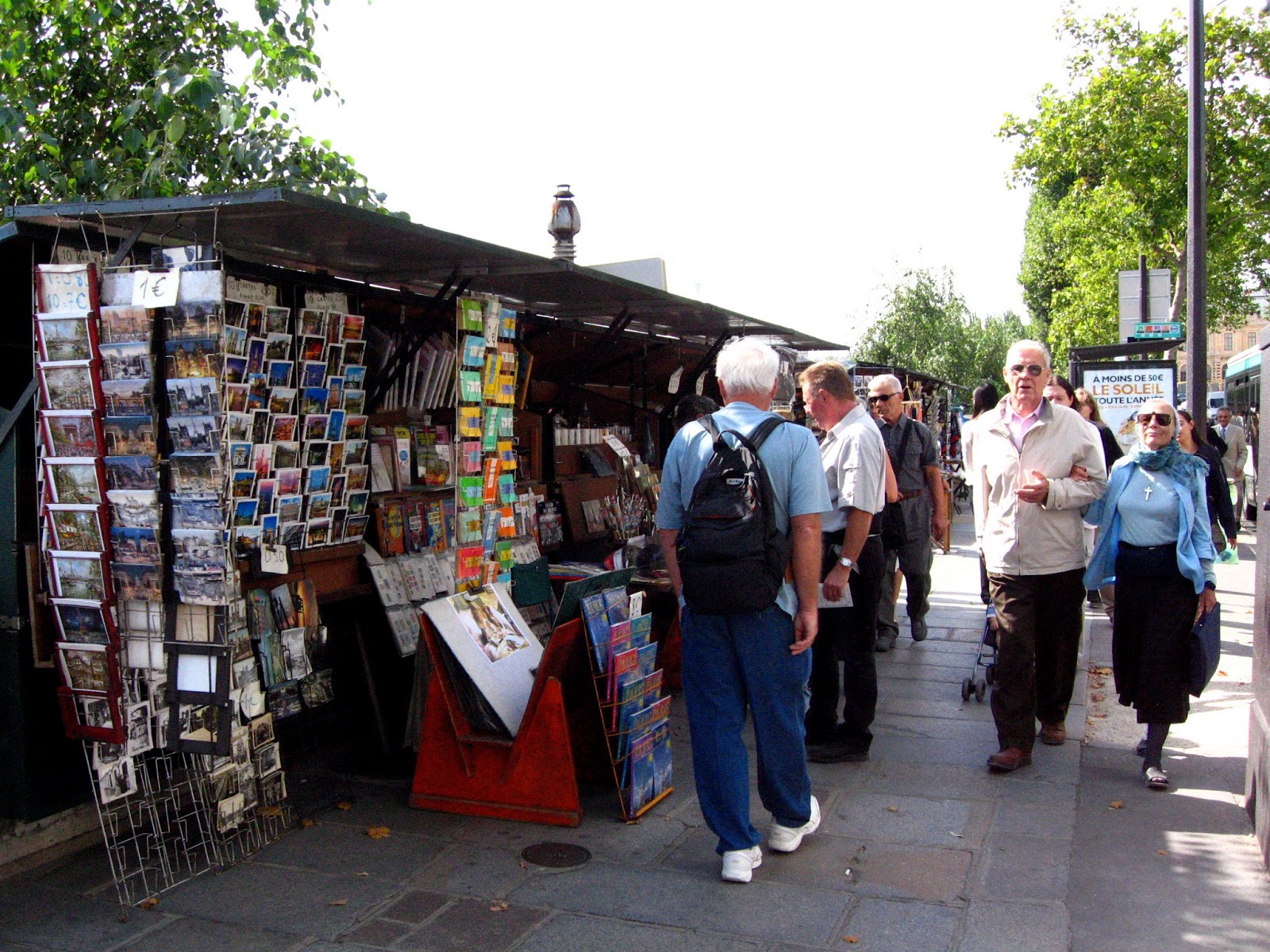
Of all the things I love about Paris, the architecture is at the very top of the list. As you walk through each arrondissement, the story of Paris' history is told through it's buildings.
Medieval, Rococo, Renaissance, Neo-Classical, Second Empire eclecticism, Art Nouveau, Contemporary and Modern are just a few of the architectural styles found in Paris. The city, a center of art and architecture, changed and evolved with the times. It is remarkable that so much of the past and variety of styles have survived.
Remains of the Gallo-Roman period are rare; vestiges of Roman public baths can be see at the Musée de Cluny. The Lutèce Arena was the home of Roman circus games.
Arene Lutece in the 5th arr.
Medieval area of St. Germain
Donjon of the Chateau de Vincennes, built in the 13th cent.
The Gothic period signaled the end of the Middle Ages and the beginning of the Renaissance. The Renaissance brought the influence of Italian art; channeled columns, coffered ceilings, ionic & doric capitals and sculptures recalling mythological figures.
Upper chapel of Sainte Chapelle considered one of the finest examples of Gothic architecture.
Hotel d'Hoeret in the Marias, 4th arr.
Flamboyant Renaissance
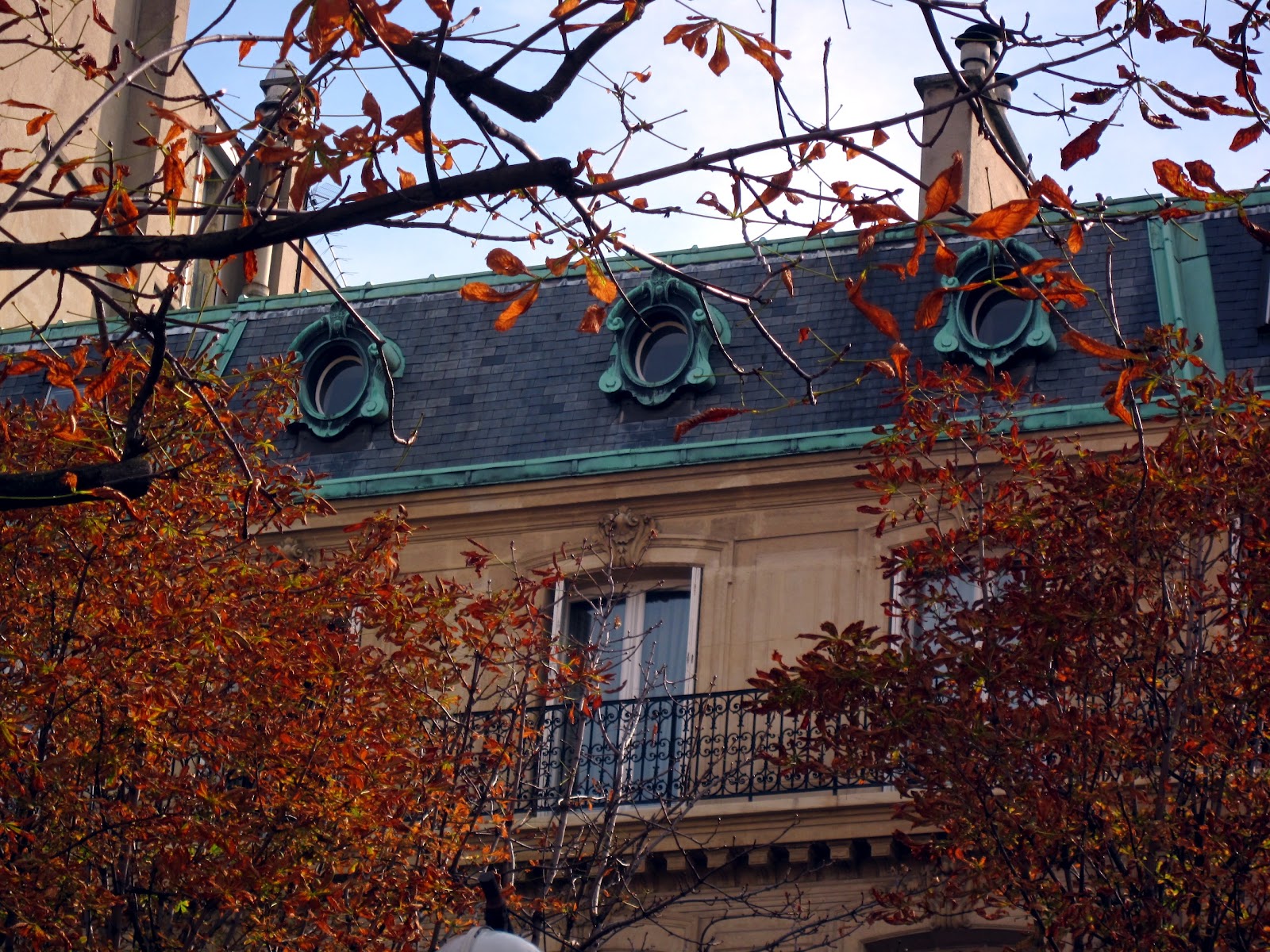
The Neo-Classical era followed to the end of the 18th c. Paris saw a proliferation of columns, arcades, cupolas and mansard roofs.
Avenue des Colonnes 2nd arr.
In the middle of the 19th century, Paris had the same structure as it did in the Middle Ages. In 1853, Napoleon III appointed Baron Hausmann to carry out his ambitious plan to modernize Paris. His goals were to improve the sanitary conditions, reduce the population density and to make the city more accessible and secure.
To this end, Hausmann widened the streets into straight grand boulevards running North-South and East-West creating more accessibilty. Where these boulevards crossed, large squares were created. Baron Hausmann's urban renovation resulted in a definitive building code. Roofs were required to have at least a 45 degree incline; this resulted in the classic Second Empire appearance which includes mansard roofs, top-floor garrets and alignment of building facades. Quarry stone was required for construction.
At the same time, large grand buildings were created. Each of the newly created arrondissements (12 to 20) was given a town hall. A hospital (Hotel Dieu) and prison were built on the Ile de la Cité. The resplendent Opéra Garnier was built.
Two rail stations were constructed, the water system was improved by creating aqueducts to bring water into the newly built reservoirs, a sewer system was created. Paris had few green spaces at the time. Inspired by a visit to London, Napoleon hired an engineer to create vast green spaces and public parks. Squares were built and trees were planted along avenues. The Bois de Vincennes was built giving the east side of the city space comparable to the Bois du Boulogne on the west.
Though not overwhelmingly popular at the time, the Hausmann transformations greatly improved the quality of life in the capital. Baron Hausmann is now known as the first great urban planner and his legacy is the magnificent city of Paris.
The "Belle Epoque" was an extension of the classical style but with more grandeur and flourish. The Opéra Garnier is the finest example. During this time metal was used in architectural design.
From the "belle epoque" came a new form,
Art Nouveau; this richly decorative style was inspired by Nature. The Metro entrances designed by Hector Guimard are a fine example of Art Nouveau style and metal construction. Only 2 of the original entrances remain today.
29 Avenue Rapp
Abbesses Metro Entrance
Art Deco is an eclectic style that began in the 1920s. Art Deco's linear symmetry was a distinct departure from the asymmetrical curvilinear style of Art Nouveau.
Entrance to an apartment building in the 3rd arr.
Theatre des Champs-Elysee (photo from Wikimedia commons)
The middle of the 20th century saw the rise of
Modern architecture; simple design, less ornamentation and usage of industrial materials~ concrete, steel and glass.
A Modern apartment building near the Place de la Bastille.
A Modern hotel in Les Halles district
Radical contemporary Pompidou Center
It is the diversity of its architecture, the blending of antiquity and elegance, that allow Paris to hold, deservedly, the title of "the most beautiful city in the world".




+blvd+de+clichy.jpg)
.jpg)


.jpg)